Best Black Seed Oil for Diabetics: Careful Picks

Five black seed oil products compared on dose, form, and sourcing, with clear guidance on why diabetics need to treat any supplement as a talk-to-your-doctor question first.

By Tanner TorresUpdated 14 min read
On this page
- A note before you buy: diabetes and black seed oil
- Best black seed oil for diabetics at a glance
- How I narrowed five nigella sativa products down
- 1. Healths Harmony Black Seed Oil — Best overall
- 2. Dr. Berg Black Seed Oil Organic — Best premium
- 3. Carlyle Black Seed Oil Softgels — Best for heavy use
- 4. Horbaach Black Seed Oil Softgels — Best for families
- 5. Amazing Herbs Premium Black Seed Oil Liquid — Best budget pick
- Softgel or liquid: which form suits you?
- What thymoquinone actually is, and why it matters
- Questions to bring to your doctor
- The verdict
- FAQ
The best black seed oil for diabetics in this set is the Healths Harmony 120-softgel bottle, because its 500mg per capsule and 1000mg per two-capsule serving make dose tracking straightforward, which matters when you're already logging carbs and medications. If you want unrefined liquid oil in glass rather than a softgel, the Dr. Berg 4 fl oz bottle is the pick, with 4.5 g of oil per serving on the label.
A note before you buy: diabetes and black seed oil
Read this section before you read the rankings. Black seed oil (nigella sativa) is sold as a general wellness supplement. None of the five products in this comparison is labelled, tested, or approved as a treatment for diabetes, and nothing here should be read as a claim that any of them lowers blood sugar, replaces medication, or improves A1c.
The reason this article exists is that a lot of people with type 2 diabetes are curious about nigella sativa after seeing it discussed online, and they want a careful look at what's actually on Amazon rather than another page of hype. That's what you're getting.
If you take metformin, insulin, a sulfonylurea, or any glucose-lowering drug, adding a new supplement is a conversation with your endocrinologist or GP, not a shopping decision. Supplements can interact with medications and can shift readings in ways that matter when your dose is already fine-tuned. Bring the bottle to your next appointment. Ask before you start. Keep testing on your usual schedule.
With that framed properly, here are the five products, compared on the specifications the listings actually publish.
Best black seed oil for diabetics at a glance
| Pick | Form & dose | Size | Price |
|---|---|---|---|
Best overall Healths Harmony Black Seed Oil |
Softgel 500mg each, 1000mg per 2-cap serving |
120 count | Check Price |
Best premium Dr. Berg Black Seed Oil Organic |
Liquid 4.5 g per serving (label claim) |
4 fl oz | Check Price |
Best for heavy use Carlyle Black Seed Oil Softgels |
Softgel 2000mg claim |
70 count | Check Price |
Best for families Horbaach Black Seed Oil Softgels |
Softgel 2000mg claim |
120 count | Check Price |
Best budget pick Amazing Herbs Premium Liquid |
Liquid Cold-pressed, unrefined |
1 fl oz | Check Price |



How I narrowed five nigella sativa products down
The starting point was Amazon's Essential Fatty Acids > Black Seed Oil category. My criteria, in order of weight:
- Dose clarity on the label. A product that publishes milligrams per serving is easier to log against your existing routine than one that talks only about drops or "a teaspoon".
- Form transparency. Cold-pressed matters because heat degrades thymoquinone, the compound most often cited in the marketing. Every one of the five picks claims cold-pressed extraction.
- Ingredient simplicity. For a supplement being considered alongside prescription drugs, single-ingredient formulations are safer to reason about than blends.
- Container that protects the oil. Amber glass beats clear plastic for a fragile plant oil; softgels sidestep the taste and light-exposure problem entirely.
What got cut: blends that packaged black seed oil with turmeric, ginger, or "immune complexes", because the interaction picture for a diabetic on medication is already complicated. Products with no published dose per serving were cut for the same reason. Products where the label leaned on vague "high potency" wording without a milligram figure were cut too.
What survived is five products that at least tell you what's in the bottle. Three are softgels. Two are liquid oils in glass.
1. Healths Harmony Black Seed Oil — Best overall
A 120-count softgel with the clearest dose labelling of the set, which is why it leads.
Best for: someone who wants a clear per-capsule dose and a familiar softgel format Skip it if: you prefer liquid oil or want a larger per-serving dose
The reason this is the best black seed oil for diabetics to start with, if you and your doctor decide to try it, is dose transparency. Each softgel is 500mg, and the label states 1000mg per two-capsule serving. That's a figure you can write in a log alongside your other supplements without ambiguity. At 120 count, one bottle covers two months at the two-cap daily serving, or four months at one cap a day.
The listing describes cold-pressed nigella sativa combined with natural vitamin E (D-alpha), and the brand says the softgels are vegan, non-GMO, and made in a GMP-certified US facility. Those are the manufacturer's claims, not independently verified here, but they're consistent with the sourcing story a cautious buyer wants to see. The softgel format also removes the strong, peppery taste of raw black seed oil, which most first-time buyers underestimate.
The trade-off: it sits in the premium price position among softgels here, and the 500mg per capsule is a smaller dose than the 2000mg figures on the Carlyle and Horbaach labels. If you're specifically looking for a higher milligram claim per pill, this isn't that product.
Pros:
- Clear 500mg per capsule and 1000mg per serving on the label
- 120-count bottle stretches to four months at one per day
- Softgel format avoids the raw oil taste
- Includes natural vitamin E per the listing
- Vegan, non-GMO, GMP-certified facility per the brand
Cons:
- Premium price position in this set
- Smaller labelled dose per capsule than the Carlyle and Horbaach softgels
- Requires two capsules to reach the stated 1000mg serving
2. Dr. Berg Black Seed Oil Organic — Best premium
A 4 fl oz glass bottle of unrefined liquid oil, and the only USDA Organic pick in the set.
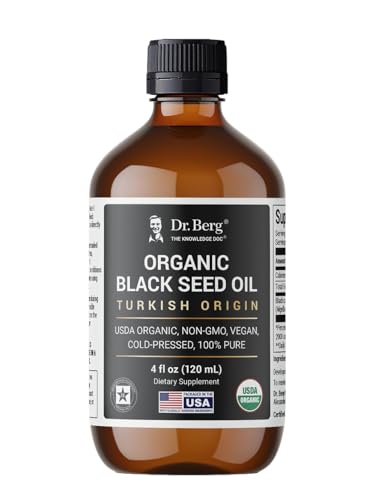
Best for: buyers who want organic, single-ingredient liquid oil in glass Skip it if: you dislike the taste of raw black seed oil
This is the most expensive pick in the set, and the reason to pay it is the sourcing story on the label. Dr. Berg lists the oil as USDA Organic, Halal, Non-GMO, and cold-pressed from Turkish black cumin seeds using a zero-heat process. The label figure is 4.5 g of oil per serving, and the bottle is a Boston round amber glass, which is the correct choice for a light-sensitive plant oil.
For a diabetic weighing this against a softgel, the liquid form has one real advantage: you see exactly what you're taking, and there's no capsule shell, no gelatin, no fillers. The brand's ingredient list is a single item. The bottle is 4 fl oz and released in 2025 per the listing. There's also a 30-day return offer noted on the product page.
The honest downside is taste. Raw black seed oil is peppery, slightly bitter, and confronting on a spoon. If that matters to you, a softgel is the better format. This bottle also runs through faster than a 120-count softgel jar if you're taking a full teaspoon daily.
Pros:
- USDA Organic and Halal certifications on the label
- Amber glass bottle protects a light-sensitive oil
- Single ingredient, no capsule shell or fillers
- 4.5 g per serving stated on the label
- 30-day return offer per the listing
Cons:
- The most expensive pick in this set
- Raw oil taste is not for everyone
- 4 fl oz doesn't last as long as a 120-softgel bottle at daily use
3. Carlyle Black Seed Oil Softgels — Best for heavy use
A 70-count softgel jar with a 2000mg label claim per softgel.

Best for: someone who wants a higher labelled milligram figure per softgel Skip it if: you want a longer supply from a single bottle
Carlyle sits at the entry end of the price positions here, and its distinguishing feature within this set is the 2000mg figure on the label. The bottle contains 70 softgels. Carlyle lists the oil as containing naturally occurring thymoquinone and calls it a source of omega 6 and 9 fatty acids. The product is labelled naturally free of gluten, wheat, yeast, lactose, soy, artificial flavour, preservatives, and non-GMO.
A note on the 2000mg claim: on softgel supplements, a number that large usually refers to a whole-seed equivalent figure rather than the amount of extracted oil in the capsule. The Amazon listing doesn't publish the extraction ratio, so the actual oil content isn't something you can pin down from the label alone. That's not unique to Carlyle; the Horbaach pick has the same story. Treat the 2000mg as a marketing figure, not a measured dose, when you're logging it.
The bulkier body of the bottle and the smaller count mean this doesn't last as long as the Healths Harmony 120 or the Horbaach 120. It's a shorter-run product at a lower price position.
Pros:
- 2000mg claim on the label per softgel
- Entry price position in this set
- Free of gluten, wheat, yeast, lactose, soy per the listing
- Softgel format sidesteps the raw oil taste
- Contains naturally occurring thymoquinone per the brand
Cons:
- Only 70 count, shorter supply than the 120 options
- The 2000mg figure isn't clearly explained as oil versus seed equivalent
- No published extraction ratio on the listing
4. Horbaach Black Seed Oil Softgels — Best for families
A 120-count softgel bottle with the same 2000mg label claim, sitting in the middle of the price positions.
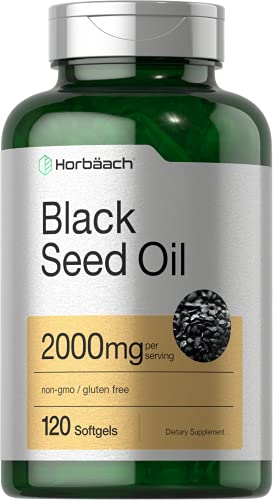
Best for: households sharing a single supplement across the year Skip it if: you need USDA Organic certification on the label
Horbaach is essentially a longer-run version of the Carlyle softgel: the same 2000mg claim per softgel, the same "cold-pressed" description, the same short list of allergens the product is free from. The difference is the count, at 120 rather than 70, and the price position, which sits mid-range in this set rather than entry level. The bottle weighs 7.78 oz per the listing and measures 4.75 x 2.75 x 2.75 in.
For a household where two adults are both taking a softgel a day, or where the bottle sits in a shared kitchen cupboard, the 120 count is the practical choice. The two-a-day math is straightforward: 120 softgels covers 60 days for one person, or 30 days for two.
The same caveat on the 2000mg figure applies here as with Carlyle. The listing describes the softgel as containing naturally occurring thymoquinone and being an excellent source of omega 6 and 9, but doesn't publish an oil-to-seed ratio. There's no USDA Organic mark either. Against Dr. Berg's liquid, this is the more convenient format at a lower price, in exchange for the softgel shell and less transparent sourcing.
Pros:
- 120-count bottle for longer runs or shared use
- Mid-range price position in this set
- Cold-pressed softgel per the manufacturer
- Free of gluten, wheat, yeast, lactose per the listing
- Contains omega 6 and 9 fatty acids per the brand
Cons:
- 2000mg figure not explained as oil versus seed equivalent
- No USDA Organic certification
- Sourcing detail on the listing is thinner than Dr. Berg's
5. Amazing Herbs Premium Black Seed Oil Liquid — Best budget pick
A small 1 fl oz glass bottle of cold-pressed liquid oil, the cheapest option in the set.

Best for: first-time buyers testing the oil before committing to a larger bottle Skip it if: you take it daily and want more than a month's supply
Amazing Herbs is the cheapest of the five and the smallest at 1 fl oz. The oil is described on the listing as premium cold-pressed nigella sativa, screw-pressed to preserve antioxidants, from organic-grown, pesticide-free, non-irradiated seeds. The brand has been on the market a while: the listing gives a 2014 release date, and it holds the second-strongest position in the set on how often it sells relative to the others. That's a rough proxy for a product that stays in circulation rather than one that comes and goes.
The right way to use this is as a trial size. If you and your doctor decide to try black seed oil, a 1 fl oz bottle lets you find out whether the taste is tolerable and whether your body agrees with it before you buy a larger container. For daily long-term use, you'd need to reorder monthly, so the cost picture changes if this becomes a regular purchase.
The listing is thinner on the dose story than Dr. Berg's. There's no gram-per-serving figure, no organic certification badge printed on the label, and the bottle is smaller than either liquid competitor in general shelf terms. It's a starter bottle, not a household staple.
Pros:
- The cheapest option in this set
- Cold-pressed, screw-pressed extraction per the brand
- Organic-grown, non-irradiated seeds per the listing
- Small 1 fl oz size is easy to trial
- Long-running product with steady demand
Cons:
- 1 fl oz doesn't last long at daily use
- No published gram-per-serving figure
- No USDA Organic mark on the listing
- Raw oil taste, same as any liquid pick
Softgel or liquid: which form suits you?
This is the split that decides more purchases than any milligram figure. Softgels and liquid oils aren't the same product in different packaging; they're two different experiences.
Softgels win on:
- Taste. You swallow the capsule and nothing lingers.
- Dose consistency. Each pill is the same.
- Portability. A jar in a bag doesn't spill.
- Logging simplicity, which matters if you already track medications.
Liquid wins on:
- Ingredient transparency. What's in the bottle is what you take.
- Flexibility. You can adjust the amount, use it topically, or add it to food.
- Fewer manufacturing steps between the seed and the spoon.
For a diabetic considering black seed oil, the softgel route is usually easier to fit into an existing routine. You already take pills. Adding one more is a small change. A liquid means a new step and a taste that many first-time buyers describe as sharp or peppery.
The counter-argument is that if you want the cleanest ingredient story, liquid oil in amber glass gives you that, and Dr. Berg's product is the example in this set.
What thymoquinone actually is, and why it matters
Every listing here mentions thymoquinone, usually shortened to TQ. It's one of the compounds naturally present in nigella sativa oil, and it's the ingredient most of the black seed oil marketing revolves around. Thymohydroquinone (THQ) and thymol are two other compounds the Healths Harmony listing mentions in the same family.
What matters for a supplement buyer: none of the five listings in this comparison publishes a standardised thymoquinone percentage, so you can't compare the products directly on TQ content. The Amazon listings describe TQ as "naturally occurring" rather than measured. That's normal for the category, but it's worth knowing before you assume a higher milligram figure means more of the active compound.
Cold-pressing matters here because heat degrades thymoquinone. All five picks are described as cold-pressed on their listings, which is a reasonable baseline.
Questions to bring to your doctor
If you're reading this because you're considering black seed oil alongside diabetes management, take this list to your next appointment:
- Is there any reason black seed oil would be a bad idea given my current medications?
- Should I test my blood sugar more often for the first two weeks after starting?
- Is there a dose you'd suggest, or a maximum you'd want me to stay under?
- Should I stop it before any upcoming procedures?
- If I notice any of these symptoms, what should I do?
Bring the specific bottle you're considering. The label answers half the questions before you ask them.
The verdict
If you're a diabetic who has already talked to your doctor and been cleared to try black seed oil, the Healths Harmony 120-softgel bottle is the best starting point in this set. It labels 500mg per capsule and 1000mg per two-capsule serving clearly, it stretches to a two- or four-month supply depending on how you take it, and the softgel format makes it easy to log alongside your existing routine. That combination of dose clarity, supply length, and simple daily use is what earns it the top spot.
If your priority is the cleanest ingredient story and you don't mind the taste of raw oil, the Dr. Berg 4 fl oz bottle is the runner-up, and the reason is straightforward: it's the only USDA Organic pick in the set, it comes in amber glass, and the ingredient list is a single item. The cutoff between them is form preference. Softgel means Healths Harmony. Liquid in glass means Dr. Berg. Neither replaces medication. Neither is a treatment. Both are supplements you consider on top of the care your doctor is already providing.
FAQ
Is black seed oil safe for diabetics to take?
Black seed oil safe for diabetics is not a settled question with a single answer, and it depends entirely on your medications and your doctor's judgment. None of the products here is approved or labelled as a diabetes treatment. Because supplements can interact with glucose-lowering drugs, the responsible step is a conversation with your endocrinologist or GP before you start, not after.
How much black seed oil per day is typical?
How much black seed oil per day depends on the product and, more importantly, on what your doctor advises. The Healths Harmony label lists a two-capsule serving of 1000mg total. Dr. Berg's label lists 4.5 g of oil per serving. Carlyle and Horbaach both claim 2000mg per softgel. None of these figures is a medical dose recommendation, and your doctor should set the amount for your situation.
Softgel or liquid: which is better for daily use?
Softgel or liquid comes down to routine and taste. Softgels are easier to fit into an existing pill regimen and avoid the strong peppery flavour of raw oil, which is why Healths Harmony leads this set. Liquid gives you cleaner ingredient transparency and lets you adjust the amount, which is why Dr. Berg is the premium pick. Neither form is medically superior.
Healths Harmony vs Dr. Berg: which should I pick?
Healths Harmony vs Dr. Berg comes down to format and sourcing. Healths Harmony gives you 120 softgels at a clear 500mg each, easier to log and easier to swallow. Dr. Berg gives you 4 fl oz of USDA Organic liquid in amber glass with a single-ingredient label. Pick Healths Harmony for daily convenience. Pick Dr. Berg if organic certification and glass packaging matter more than taste.
What's the biggest mistake buyers make with black seed oil?
The biggest mistake buyers make with black seed oil is treating a supplement label as if it were a prescription. A 2000mg figure on a softgel usually refers to a seed-equivalent number, not measured oil content, and the listings here don't publish the ratio. Treat any milligram claim as marketing until your doctor tells you what actually matters, and never adjust diabetes medication based on a supplement label.
Start with the appointment, not the checkout. That's the honest advice for anyone landing here after searching for the best black seed oil for diabetics: the product only matters after your doctor has said yes. Once you have that clearance, the Healths Harmony 120-softgel bottle is the pick that puts the fewest obstacles between you and a consistent daily routine, with a labelled 500mg per capsule you can log next to everything else you already take. Bring the bottle to your next visit. Keep your usual testing schedule. Treat the first two weeks as observation, not conclusion.