Best Earplugs for Clubbing When Sound Quality Matters

Five earplug sets compared on published specs, tip counts and reusability, with a named winner for club nights and three conditions that flip the pick to something cheaper.

By Tanner TorresUpdated 14 min read
On this page
- Best earplugs for clubbing at a glance
- The criteria I ranked these on, and why
- Why does a lower dB number win for clubbing?
- 1. Hearprotek Concert Ear Plugs — Best overall
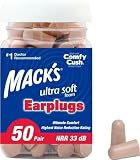
- 2. Mack's Ultra Soft Foam Earplugs — Most versatile
- 3. JUSTRVN Ear Plugs for Sleeping — Best budget pick
- 4. Mack's Pillow Soft Silicone Earplugs — Best for families
- 5. ARROX Adjustable Ear Plugs for Sleeping — Best for quiet operation
- Reusable silicone or a bag of foam?
- What the listings do not tell you
- Hearprotek vs Mack's foam: which for your next club night?
- The verdict
- FAQ
The best earplugs for clubbing are the Hearprotek Concert Ear Plugs, because a 20dB filter claim drops the volume without turning the low end into mud. If you go out often enough to lose a pair every other week, Mack's Ultra Soft Foam Earplugs and their 50 pair box are the smarter buy at 33dB NRR. Get this wrong and you spend the night hearing a muffled thud where the vocal should be, then take them out an hour in and undo the entire point.
That is the failure mode nobody warns you about. Overblocking is not safer if it makes you remove the plugs. A pair rated for a table saw kills the treble first, so the mix goes flat, you pull them out to hear the drop, and you spend the last two hours of the night completely unprotected. The picks below split cleanly along that line.
Best earplugs for clubbing at a glance
| Pick | Reduction claim | Reusable? | Price |
|---|---|---|---|
Best overall Hearprotek Concert Ear Plugs |
20dB claim | Yes, silicone | Check Price |
Most versatile Mack's Ultra Soft Foam Earplugs |
33dB NRR | No, 50 pair box | Check Price |
Best budget pick JUSTRVN Ear Plugs for Sleeping |
25dB-30dB claim | Yes, silicone | Check Price |
Best for families Mack's Pillow Soft Silicone Earplugs |
Moldable putty seal | No, 24 count | Check Price |
Best for quiet operation ARROX Adjustable Ear Plugs |
13-45dB, 3 modes | Yes, silicone | Check Price |



The criteria I ranked these on, and why
Three things decided the order, weighted in this sequence.
- Sound quality at volume, weighted heaviest. A club plug has one job the sleep plug does not: it has to keep music listenable. Only one listing in this set explicitly claims a flat-ish filter rather than raw blocking, and that shaped the top spot.
- Fit range, weighted second. A plug that seals badly gives you neither protection nor a decent mix. I counted included tips: JUSTRVN lists 8 ear tips, ARROX lists 4 pairs of eartips, Hearprotek lists 2 sets in small and standard.
- Cost per night out, weighted third. Clubbing means pockets, cloakrooms and taxis. A 50 pair box survives that reality in a way a single silicone pair does not.
Why that order? Because hearing protection you take out at midnight protects nothing. Comfort and clarity are what keep the plugs in your ears for four hours, and everything else follows from that.
Two picks were kept despite being sold as sleep plugs. Amazon's results for the best earplugs for clubbing mix sleep, swimming and study products together, and I have not pretended otherwise below. The category here is simply Ear Care, Earplugs.
Why does a lower dB number win for clubbing?
Most guides to the best earplugs for clubbing compare the biggest reduction figure and stop. That is the wrong criterion.
Two of these products publish or claim numbers above 30dB. Mack's Ultra Soft Foam carries a 33dB NRR. ARROX claims up to 45dB in its highest mode. Both are genuinely more blocking than Hearprotek's 20dB claim. Neither is automatically better in a club.
Here is the trick with attenuation: foam and putty do not block every frequency evenly. They take more off the high end than the low end, which is why voices go muddy and hi-hats vanish while the kick drum still shakes your ribs. Hearprotek's listing addresses exactly this, saying the plugs bring "down the overall volume, blocking background noises at a comfortable level while preserving the sound clarity". That is the manufacturer's claim, not a measured curve, but it is the only claim in this set aimed at music rather than silence.
So the reduction number is a ceiling, not a score. What you actually want is enough reduction to protect you, spread evenly enough that the DJ's mix survives. Two practical cutoffs:
- Around 20dB is plenty for a club night if the plug is filtered rather than solid.
- Above 30dB, expect to sacrifice clarity in exchange for a bigger safety margin.
1. Hearprotek Concert Ear Plugs — Best overall
The only pick in this set built around keeping music intelligible rather than shutting it out.
Best for: clubbers who still want to hear the mix
Skip it if: you need one pair to cover a whole friend group
Hearprotek is the pick I'd start with for club nights, and the reason is narrow. The listing claims 20dB of reduction across 2 sets in small and standard sizes, with silicone shells the brand describes as low-profile and translucent for a discreet look at concerts and clubs. That combination, moderate filtered attenuation plus a visually discreet body, is what separates a music plug from a sleep plug.
The physical numbers are small: 15.4 x 8 x 20 mm per plug, model HP16, in blue. Two pairs means one for you and one spare, or one for a friend. Hearprotek is direct about the limits, noting these "do not block all noise completely" and instead keep volume at a safer level. That honesty matters, because the whole design premise is partial reduction.
The trade-off is quantity and cost position. This is the second most expensive pick here and it gives you 2 pairs, where Mack's foam gives you 50 pair for less. If you lose earplugs in cloakrooms, that maths hurts.
Pros:
- 20dB claim aimed at music, not silence
- 2 sets in small and standard for fit range
- Low-profile translucent shell, discreet on a night out
- Reusable silicone body
- Compact 15.4 x 8 x 20 mm plug size
Cons:
- Only 2 pairs, easy to lose in a club
- Second-highest price position in this set
- Only one seller lists it
- No published NRR figure, just a 20dB manufacturer claim
- Listed warranty field contains unrelated text
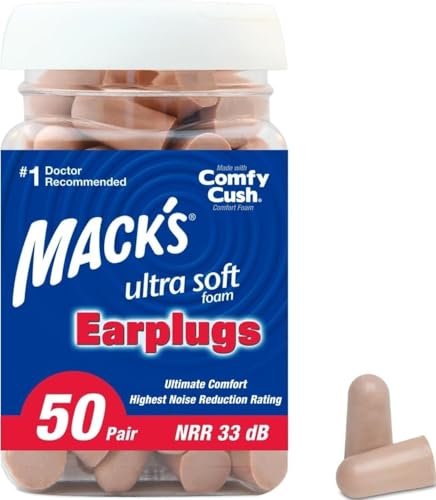
2. Mack's Ultra Soft Foam Earplugs — Most versatile
Fifty pair at 33dB NRR, and the one set here you can afford to lose.
Best for: anyone who loses earplugs constantly
Skip it if: you care about music clarity
This is the highest published attenuation figure in the set: a 33dB Noise Reduction Rating, printed on the listing rather than claimed loosely. It arrives as 50 pair in a jar weighing 1.59 oz, measuring 2.52 x 4.25 x 2.52 in, model 9250, in beige. Mack's describes the foam as "super low-pressure, slow release, Comfy Cush Comfort Foam" and lists concerts and loud events among its uses.
The case for these in a club is economics, not acoustics. At 50 pair you can shove a fresh set in your jacket every weekend for a year, and losing one costs nothing. It also sells faster than any other pick here, which tells you something about how many people just want a big box of plugs that works.
Foam is the reason it sits second rather than first. Solid foam attenuates the high frequencies hardest, so vocals and cymbals thin out while the bass punches through. You get protection, and you lose the mix. Beige plugs are also the most visible option here, which some people care about and some do not.
Pros:
- 33dB NRR, the highest published figure in this set
- 50 pair per box, cheapest per use here
- Sells faster than the rest of this set
- Low-pressure slow-release foam per the listing
- Light 1.59 oz jar, easy to keep at home
Cons:
- Foam muffles treble, so club mixes lose detail
- Single-use in practice, not washable like silicone
- No size options, one shape for every ear
- Beige colour is the most noticeable of the five
3. JUSTRVN Ear Plugs for Sleeping — Best budget pick
Eight ear tips in the box, which is the widest fit range in this comparison.

Best for: unusual ear canal sizes
Skip it if: you want a published NRR figure
JUSTRVN is the cheapest of the five and it packs the most tips. The listing details 2 pairs of earplugs, 8 sizes of soft silicone ear tips, 1 plastic storage box, 1 round carabiner and 1 instruction card. If previous plugs have fallen out or hurt after an hour, that tip range is the single most useful thing on this page.
The claimed reduction is 25dB-30dB, which JUSTRVN describes as providing "natural quiet sound quality". Each plug weighs 1.81 g and the packed dimensions are 0.78 x 0.9 x 0.59 in, so the whole kit disappears into a pocket. The carabiner is a small detail that matters when you are clipping something to a bag on a night out rather than leaving it in a coat.
The catch is honesty about what this is. It is marketed for sleeping first, concerts second, and the reduction range is a claim rather than a rated NRR. It also sells slower than the two Mack's products and Hearprotek, so it is the least proven of the group by that measure.
Pros:
- 8 silicone tip sizes, the widest fit range here
- Cheapest pick in this set
- Includes storage box and carabiner
- Reusable silicone that the brand says resists dust
- Tiny 1.81 g plugs, 0.78 x 0.9 x 0.59 in packed
Cons:
- 25dB-30dB is a claim, not a published NRR
- Designed for sleep first, clubs second
- Slower selling than three other picks here
- Black shells show up against pale skin more than translucent ones
4. Mack's Pillow Soft Silicone Earplugs — Best for families
Moldable putty that seals any ear shape, and 24 count means everyone in the flat gets some.

Best for: sharing across a household
Skip it if: you want something you can pocket and reuse
These are the only mouldable plugs in the comparison. Mack's says the "soft moldable silicone putty molds very comfortably to the unique contours of any ear", which is a different approach from every other pick: instead of matching a tip to your canal, you press putty into place. For ears that reject standard tips, that is a genuine solution.
The pack is 24 count, weighs 4.8 oz and ships in a 1 x 5.25 x 3.75 in carton, model 712, in white. The listing names concerts among its uses, alongside sleeping, snoring, swimming and studying. Twenty-four sets spread easily across a household or a group heading out together, which is why this earns the family label.
For clubbing specifically, putty is the least convenient option here. It picks up hair and lint, it is fiddly to fit in a dark venue, and it is not something you re-seat mid-night after a bathroom break. It is also priced above the two entry picks despite being consumable. Buy it for the fit problem, not the night out.
Pros:
- Moldable putty seals ear shapes that reject tips
- 24 count spreads across a household
- Made in USA per the listing
- Doubles for swimming and sleeping
- White putty is discreet once seated
Cons:
- Fiddly to fit in a dark venue
- Picks up hair and lint, not practical to reuse
- Priced above both entry picks despite being consumable
- No dB figure published at all
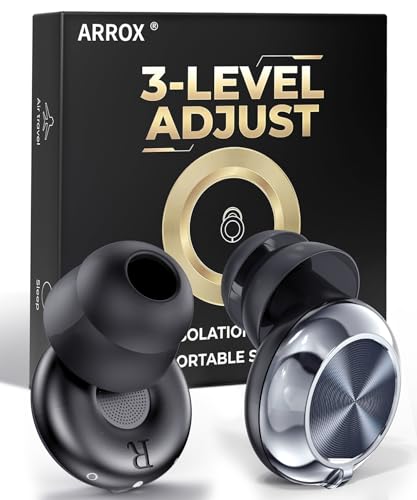
5. ARROX Adjustable Ear Plugs for Sleeping — Best for quiet operation
Three switchable modes spanning 13-45dB, so one pair covers the club, the flight and the bedroom.
Best for: one pair for clubs, flights and sleep
Skip it if: you want published dimensions before buying
ARROX takes the most ambitious approach in this set. The listing claims three adjustable modes covering 13-45dB, plus both dual-layer and single-layer plugs in the box and 4 pairs of eartips in S/M/L single-layer plus one dual-layer pair. If you want a single purchase to handle a loud room on Saturday and a snoring partner on Sunday, that flexibility is the argument.
The 45dB top figure is the highest number anywhere on this page, though it is a manufacturer claim rather than a rated NRR. ARROX also markets the shells as an accessory-inspired design suitable for daily wear, and they come in black. Sitting roughly mid-range for this set, they cost less than either Mack's product.
Two things push these to fifth. The listing publishes almost nothing measurable: no weight, no dimensions, no NRR, and a size field that just reads 1 Count. And they sell far slower than anything else here, with only one seller listing them. Buying on a specification sheet this thin is a leap, and for clubbing you are still relying on a claim rather than a filter design.
Pros:
- 3 modes spanning 13-45dB per the listing
- Dual-layer and single-layer plugs both included
- 4 pairs of eartips in the box
- Roughly mid-range price for this set
- Black, low-key styling
Cons:
- No published weight, dimensions or NRR
- The slowest seller of the five by a wide margin
- Only one seller lists it
- 45dB is a claim with no rating behind it
- Mode switching adds fiddle in a dark venue
Reusable silicone or a bag of foam?
This is the real fork in the road, and it has nothing to do with decibels.
Reusable silicone covers Hearprotek, JUSTRVN and ARROX. You wash them, you keep them in a case, you carry the same pair for months. Better for music, because a filtered or vented silicone plug can pass more high frequency than solid foam. Worse for club reality, because one pair dropped on a sticky floor is one pair gone.
Consumable covers Mack's foam at 50 pair and Mack's putty at 24 count. Fresh plug every time, so hygiene is never a question. But foam compresses and blocks broadly, and putty is a fiddle.
- Go silicone if sound quality is the priority and you are careful with small objects.
- Go foam if you go out weekly and treat plugs as disposable.
- Go putty only if standard tips genuinely do not fit your ears.
My honest read: buy one filtered silicone pair for nights when the music matters, and keep a foam box at home for everything else. That is two purchases, not one, and it is cheaper than replacing a lost premium pair three times.
What the listings do not tell you
Read these five listings side by side and the gaps are as informative as the specs.
Nobody publishes a full attenuation curve. Only Mack's foam gives a rated NRR at 33dB. Hearprotek's 20dB, JUSTRVN's 25dB-30dB and ARROX's 13-45dB are all manufacturer claims. That is normal for this category, but it means you cannot compare the three silicone picks against each other with any precision.
Warranty data is essentially absent. Not one of these five publishes usable warranty terms. Hearprotek's warranty field contains text that has nothing to do with earplugs at all, which is a reminder that listing fields get filled carelessly.
Physical dimensions are inconsistent. Hearprotek gives plug size in millimetres, JUSTRVN gives packed dimensions in inches, ARROX gives nothing. Comparing bulk in the ear across the set is not really possible from the data.
Marketing scenario lists mean little. Four of the five name concerts, parties or clubs among their uses. Three of them lead with sleeping in the product title. A scenario in a bullet list is a search term, not a design decision.
Hearprotek vs Mack's foam: which for your next club night?
Head to head, these two answer different questions.
Hearprotek wins on sound. A 20dB filtered claim with 2 sets in small and standard is built for the case where you want to hear the set list. Mack's foam wins on everything practical: 33dB NRR published rather than claimed, 50 pair per box, and the fastest-selling product of the five.
The deciding question is how much you care about the music itself. If you go to hear a specific DJ, Hearprotek. If you go to be in a loud room with friends and just want your ears intact tomorrow, Mack's foam does that job for less and you will not panic when one goes missing.
One more angle: replacement risk. A club is the single worst environment for keeping track of a tiny object. Buying 2 reusable pairs and buying 50 disposable ones are different bets on your own carefulness. Be honest about which one you are.
The verdict
If you care how the music sounds, buy the Hearprotek Concert Ear Plugs. Its 20dB claim and small-plus-standard sizing are the only combination here aimed at preserving clarity rather than manufacturing silence, and the low-profile translucent shell stays discreet in a venue.
If you care mainly about protection and losing things, buy Mack's Ultra Soft Foam Earplugs. A 33dB NRR is the only rated figure on this page, and 50 pair means the cost of a lost set is effectively nothing.
The cutoff is whether you would notice a muffled vocal. Under filtered plugs the mix stays recognisable; under 33dB foam it does not, and if that would not bother you, the foam is the better value by a wide margin.
Two smaller conditions flip it again. If standard tips have never sealed in your ears, JUSTRVN's 8 ear tips or Mack's mouldable putty solve that first, before anything about decibels matters. And if you want one pair for the club, the plane and the bedroom, ARROX's 13-45dB three-mode design is the only pick built for that, though you are buying on the thinnest specification sheet here.
FAQ
Are the best earplugs for clubbing worth buying at all?
The best earplugs for clubbing are worth buying if you go out more than a few times a year, because a night in a loud room is hours of sustained exposure. All five picks here cost less than one night out. The Hearprotek pair at 20dB keeps the music listenable, which is the difference between plugs you wear and plugs you pocket.
Which earplugs for clubbing offer the best value per use?
For value per use, Mack's Ultra Soft Foam Earplugs are unbeatable in this set: 50 pair in one 1.59 oz jar with a 33dB NRR. Even at a set per weekend, that is roughly a year of nights out. The cheapest single purchase is JUSTRVN at 2 pairs, but reusable silicone only stays cheap while you avoid losing it.
What dB reduction do I actually need in a club?
The dB reduction you actually need is more modest than the marketing suggests. Around 20dB, as Hearprotek claims, cuts volume meaningfully while letting the mix through. Mack's foam at 33dB NRR gives more margin but takes the treble with it. ARROX claims a 13-45dB range across three modes if you want to choose per venue.
Hearprotek or JUSTRVN: which suits an awkward ear canal?
Between Hearprotek and JUSTRVN, the awkward-canal answer is JUSTRVN. It ships 8 sizes of silicone ear tips against Hearprotek's 2 sets in small and standard. Hearprotek's filtered 20dB design sounds better for music, but a plug that will not seal delivers neither clarity nor protection. Fit first, filter second.
What mistake do first-time buyers make with club earplugs?
The mistake first-time buyers make is chasing the largest number on the box. A 45dB claim or a 33dB NRR blocks broadly, so voices and hi-hats vanish while bass survives, and most people then remove the plugs mid-night. That leaves you unprotected for the loudest hours. Moderate, filtered reduction you keep in beats heavy reduction you take out.
Pick one filtered pair and one bulk box, and the whole problem goes away. Order the Hearprotek set for the nights you actually want to hear the music, keep the Mack's foam jar by the door for everything else, and stop treating hearing protection as a single purchase. What makes Hearprotek the right default is not its numbers but its premise: it is the only pick in this group designed on the assumption that you came to listen. Everything else here was built to make the world quieter, which is a different problem entirely.