Best Eye Cream for Acne Scars by Ingredient Type

Seven scar creams compared for use around acne marks, with the specifications, formats and trade-offs that actually decide which one belongs in your routine.

By Tanner TorresUpdated 18 min read
On this page
- Best eye cream for acne scars at a glance
- A note on the eye area and this category
- How I screened the shortlist
- 1. Mederma PM Intensive Overnight Scar Cream — Best overall
- 2. Biocorneum Silicone Scar Gel with Silishield — Best premium
- 3. Mederma Scar Cream Plus SPF 30 — Best upgrade
- 4. TreeActiv Acne Scar Cream for Face and Body — Runner-up
- 5. HealFast Silicone Scar Gel — Best for pros
- 6. SBHEANGBA Scar Removal Cream — Best minimal setup
- 7. AcneFree Terminator 10 Spot Treatment — Best budget pick
- Silicone, benzoyl peroxide or botanical: which format fits your marks?
- How long before you see anything?
- What the listings will not tell you
- Head-to-head: Mederma PM vs Biocorneum
- The verdict
- FAQ
The best eye cream for acne scars in this seven-product comparison is Mederma PM Intensive Overnight Scar Cream, a 1 oz nighttime formula the brand says shows visible results in as little as 14 days. If sun exposure is driving your marks darker, Biocorneum Silicone Scar Gel with SPF 30 is the better buy, offering a 0.69 fl oz silicone gel with broad-spectrum protection built in.
Best eye cream for acne scars at a glance
| Pick | Size | Format | Price |
|---|---|---|---|
Best overall Mederma PM Intensive Overnight Scar Cream |
1 oz | Overnight cream | Check Price |
Best premium Biocorneum Silicone Scar Gel with Silishield |
0.69 fl oz | Silicone gel + SPF 30 | Check Price |
Best upgrade Mederma Scar Cream Plus SPF 30 |
0.7 oz | Daytime cream + SPF 30 | Check Price |
| 2 fl oz | Botanical cream | Check Price | |
Best for pros HealFast Silicone Scar Gel |
1.06 oz | Silicone gel | Check Price |
Best minimal setup SBHEANGBA Scar Removal Cream |
Not listed | Silicone gel | Check Price |
Best budget pick AcneFree Terminator 10 Spot Treatment |
1 oz | Benzoyl peroxide 10% | Check Price |



A note on the eye area and this category
Search intent for "best eye cream for acne scars" runs ahead of what the market actually sells. None of the seven products here is labeled as an eye cream. Every one sits inside a scar-treatment or acne-treatment category, and every listing addresses face and body use in general terms. That matters because the skin around the eye is thinner and more reactive than the cheek or jawline, and manufacturers who wanted their formula used there would say so on the tube.
So the honest framing is this: the best eye cream for acne scars, from this shortlist, is the scar cream whose format and ingredients you can most safely apply near the orbital bone. That rules some picks out immediately. A 10 percent benzoyl peroxide spot treatment does not belong on the under-eye. A silicone gel with SPF 30 is a very different proposition to a triple-action overnight cream.
Read every label before you take anything close to your eye, and if a listing does not describe periocular use, treat the outer edge of the cheekbone as your working zone. That is the guidance the products themselves support.
How I screened the shortlist
I compared the published specifications and manufacturer descriptions across seven creams in the First Aid and Face treatment categories on Amazon, weighting three things that actually decide this purchase.
- Format suitability near the eye. Overnight creams and silicone gels are simpler to place accurately than harsh spot treatments.
- Published clinical language. Two picks give a specific improvement window in days. That is worth more than a vague promise.
- Set-relative price. Where a specification is missing, the price position in the group has to earn its place against pricier alternatives.
The criteria are weighted in that order. Fit for the delicate skin zone comes first, then evidence of a real timeline, then value inside this specific set of seven. It is a shortlist built for someone whose real goal is to work on post-acne marks in and around the eye area, not for someone treating a surgical incision or a burn, even though the category overlaps.
Two picks were nearly cut. The SBHEANGBA cream publishes almost no specifications at all, and its sales rank of 76,669 is well behind the rest of the field. It stays because it represents the cheapest silicone-format entry point. The AcneFree Terminator is an active-blemish treatment rather than a scar cream, but it earns a slot for readers whose marks are still forming.
1. Mederma PM Intensive Overnight Scar Cream — Best overall
A 1 oz nighttime scar cream from a category-leading brand, with a published 14-day improvement claim and the lowest sales rank in the shortlist.
Best for: post-acne marks you want to work on overnight Skip it if: you need daytime SPF built in
Mederma PM wins this comparison on three counts. It is the only pick built specifically for overnight application, which matters near the eye because you are not layering it under makeup or dragging it under a lash line during the day. It gives a concrete claim, "noticeable results in as little as 14 days", which the brand attributes to a triple-action formula working with the skin's nighttime activity. And it is the fastest seller in this set, with a sales rank of 909 in First Aid Scars and Wounds, well ahead of the six others here.
The tube holds 1 oz, weighs 28.3 g and measures 6 x 3 x 1.5 in, so it stores easily on a bathroom shelf. Application is once at night, which is a much easier habit to build than the three-times-daily schedule the SPF version demands. It is also an HSA and FSA eligible product per the listing, which is worth checking against your own plan.
The trade-off is real: there is no sun protection in the formula, so you still need a daytime sunscreen if you want to keep marks from darkening.
Pros:
- 1 oz tube, released 2021
- Once-nightly application fits an eye-area routine
- Brand claims visible change in 14 days
- Lowest sales rank in this seven-product shortlist
- HSA and FSA eligible per the listing
Cons:
- No SPF, so a separate daytime sunscreen is needed
- Not specifically labeled for periocular use
- Sits in the premium price position
2. Biocorneum Silicone Scar Gel with Silishield — Best premium
A 0.69 fl oz silicone gel with broad-spectrum SPF 30, and the most expensive pick in this comparison.

Best for: raised or older marks where sun exposure is a factor Skip it if: you prefer a cream texture over a silicone gel
Biocorneum takes the top price position and earns it with a combination the rest of the set does not offer: crosslinked silicone plus SPF 30 in one step. The brand calls the technology Silishield and says it provides a protective layer while shielding against UV rays that can darken scars over time. For post-acne marks on the outer cheek and temple, that combination is genuinely useful, because sun exposure is one of the mechanisms that makes marks stubborn.
The tube is 0.69 fl oz, which sounds small until you consider that a silicone gel is applied in a thin film. Biocorneum claims visible improvement within 60 days on new scars and 90 days on older ones, a slower published timeline than Mederma PM's 14-day claim but tied to a different mechanism. The listing was released in 2012, making it the oldest product in this shortlist by nearly a decade, and the sales rank of 2,210 sits second in this set behind Mederma PM.
The trade-off is texture. Silicone gel is not a cushioning cream, and if you want a moisturising feel around the eye, this is not the right pick.
Pros:
- Silicone gel plus broad-spectrum SPF 30
- Published 60 and 90 day improvement timelines
- Second-best sales rank in this comparison
- Suitable for older marks per the brand
- Longest-established listing in this shortlist
Cons:
- Highest price position of the seven
- Gel format, not a moisturising cream
- Small 0.69 fl oz tube size
3. Mederma Scar Cream Plus SPF 30 — Best upgrade
A daytime companion to Mederma PM, adding SPF 30 in a 0.7 oz tube for scar care that continues through the day.

Best for: daytime use where SPF 30 matters Skip it if: you dislike reapplying every two hours
If you already like Mederma PM as your night step, this is the daytime pair. Mederma Scar Cream Plus SPF 30 is a 0.7 oz cream, 19.8 g by published weight, that combines the brand's Cepalin botanical formula with broad-spectrum sunscreen. Sun protection matters more than most people expect for post-acne marks, because unprotected UV exposure is what turns fading pigmentation into a longer job.
The application schedule is the honest catch. The listing calls for use at least three times daily, and the brand recommends 8 weeks on new scars and 3 to 6 months on existing ones, with reapplication every two hours when you are in direct sun. That is a real commitment. It sits in the middle of the price range for this set and, at a sales rank of 8,618, is a slower seller than the flagship Mederma PM.
The trade-off compared to Biocorneum is format. This is a cream, so it doubles as light moisturiser, but it does not carry silicone technology, and the manufacturer positions it as a general daytime scar cream rather than a targeted gel.
Pros:
- SPF 30 broad-spectrum built in
- Cream texture, easier under makeup than a gel
- Same-brand match for Mederma PM at night
- HSA and FSA eligible per the listing
- Cepalin botanical formula the brand highlights
Cons:
- Three-times-daily use is a real habit change
- Reapply every two hours in direct sun
- Smallest tube in the Mederma range here
4. TreeActiv Acne Scar Cream for Face and Body — Runner-up
A 2 fl oz botanical cream that claims 500+ uses per container, the largest published size in this comparison.

Best for: sensitive skin looking for a gentle daily cream Skip it if: you want published clinical timelines
TreeActiv sits third by price rank in this shortlist and offers the biggest published size at 2 fl oz. The brand lists aloe vera, jojoba oil and rosehip oil as the core ingredients, and describes the formula as fast-absorbing and non-greasy. The most concrete claim on the listing is longevity: 500+ uses per container. If a smaller Mederma or Biocorneum tube looks like it will empty before you see change, that raw runtime is worth something.
There are no published dimensions, weight or model number on this listing, which is a real gap when you are comparing against the Mederma pair or Biocorneum. The sales rank of 192,945 is the slowest of the seven. And the brand does not attach a clinical timeline the way both Mederma products and Biocorneum do, so you are trusting the ingredient story rather than a stated week or day count.
Its trade-off within this set is straightforward. TreeActiv gives you the mildest, largest-format cream, and the least specific promise about when you might see anything change.
Pros:
- 2 fl oz, largest published size here
- Botanical ingredient list including rosehip oil
- Brand claims 500+ uses per container
- Fast-absorbing per the listing
- Formulated for all skin types per the brand
Cons:
- No published clinical timeline
- No dimensions, weight or model listed
- Slowest seller in this seven-product set
5. HealFast Silicone Scar Gel — Best for pros
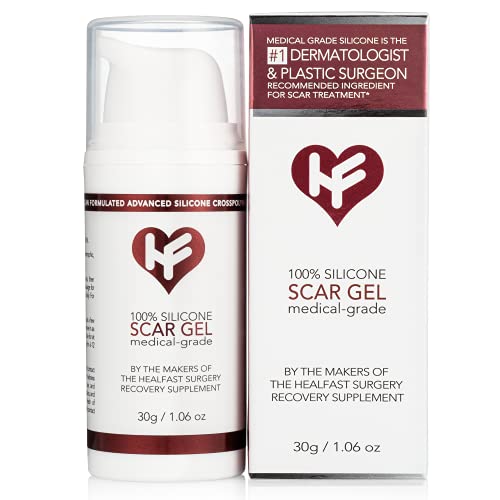
A 1.06 oz medical-grade silicone gel, positioned by the brand as a companion to a broader surgery-recovery plan.
Best for: someone already following a surgeon-guided plan Skip it if: acne marks are your only concern
HealFast is the outlier in this comparison. The brand positions it as a physician-made silicone gel trusted by plastic surgeons, dermatologists and burn experts, and the listing is explicit that the gel is intended as part of a wider recovery routine that includes their oral supplement. That framing makes it a stronger fit for someone already working with a clinician than for a shopper picking a scar cream cold.
The published specifications are thin: a 1.06 oz size and "Scar Gel" as the colour field. There are no dimensions, no weight and no model number, which puts it closer to TreeActiv than to the well-documented Biocorneum listing. The sales rank of 7,412 sits in the middle of the pack. The manufacturer names acne scar removal among its use cases, so the fit for post-acne marks is genuine, just not the primary use case.
The trade-off is scope. If your goal is to fade a handful of dark marks near the eye, HealFast is over-specified. If you have surgical scarring plus acne marks, its versatility is the point.
Pros:
- Medical-grade silicone gel per the brand
- 1.06 oz, largest silicone-format size here
- Named for acne scar use among others
- Positioned for surgery and burn recovery
- Multi-purpose across scar types
Cons:
- Sparse published specifications
- Priced at the top end of this shortlist
- Marketed around a wider recovery system
6. SBHEANGBA Scar Removal Cream — Best minimal setup
An entry-level silicone-format scar cream and the second-cheapest option in this comparison.

Best for: a low-cost silicone gel trial Skip it if: you want a manufacturer with published specifications
SBHEANGBA is the pick that tests how much you value the brand's paperwork. The listing gives no size, no weight and no dimensions, and the manufacturer descriptions read as marketplace copy rather than clinical language. What you can see is the format claim, "silicone scar gel formula", and the intended use across surgical scars, acne scars, C-section, burns and stretch marks. The category placement matches: First Aid Scars and Wounds, the same slot as Mederma and Biocorneum.
Two data points push against it. The sales rank of 76,669 is second-slowest in this set, well behind Mederma PM's 909, and its position as the second-cheapest here means the sacrifice for the low price is documentation, not headline function. If you have never tried a silicone-format product and want to see whether the texture suits you before spending on HealFast or Biocorneum, that is where SBHEANGBA fits.
The trade-off against the rest of the field is transparency. You are getting a silicone gel at entry-level pricing without the published specifications that let you compare like for like.
Pros:
- Second-cheapest option in this shortlist
- Silicone gel format at entry-level pricing
- Named for acne scars among its uses
- Listed for all skin types per the brand
- Same category as the premium picks
Cons:
- No published size, weight or dimensions
- Second-slowest seller in the seven
- Marketing language stronger than specifications
7. AcneFree Terminator 10 Spot Treatment — Best budget pick
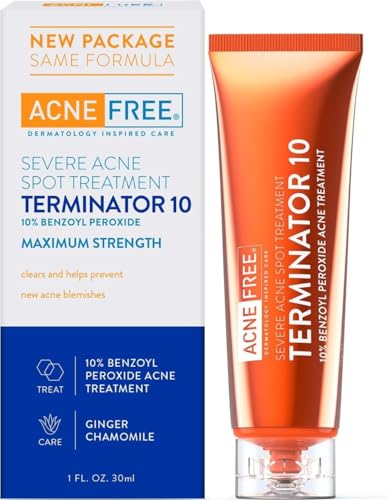
A 10 percent benzoyl peroxide spot treatment in a 1 oz tube, and the cheapest option in this shortlist.
Best for: treating active blemishes before scars set in Skip it if: the marks are already flat and pigmented
The AcneFree Terminator is here for one reason: the cheapest way to reduce the acne marks you will have in three months is often to treat the acne you have right now. This is a maximum-strength 10 percent benzoyl peroxide spot treatment, oil-free and fragrance-free per the listing, in a 1 oz tube weighing 28.3 g. It is a different product to the six scar creams above it, and it should be used differently.
Two things about it are unmistakable. It is the cheapest of the seven, and among the faster sellers with a sales rank of 1,289 in Face Treatments and Masks, second only to Mederma PM in this comparison. That popularity is consistent with active-acne buyers, not scar-fading buyers, which is the point.
The trade-off you have to understand before buying is straightforward: 10 percent benzoyl peroxide is not for use near the eye. Keep it on active blemishes on the cheek, jawline and forehead, and pair it with one of the scar creams above for marks left behind. Its role is prevention of the next round, not treatment of what is already there.
Pros:
- Cheapest pick in this seven-product set
- Maximum-strength 10 percent benzoyl peroxide
- Oil-free and fragrance-free per the listing
- 1 oz tube matches the flagship Mederma format
- Second-fastest seller in this comparison
Cons:
- Not for use near the eye
- Treats active acne, not existing scars
- Different category to the six scar creams here
Silicone, benzoyl peroxide or botanical: which format fits your marks?
Three formats compete for the "best eye cream for acne scars" slot, and the right one depends entirely on what stage your marks are at.
- Silicone gel (Biocorneum, HealFast, SBHEANGBA). Best for raised or textured marks. Forms a thin film. Slower published timelines, typically 60 to 90 days per Biocorneum. Not a moisturising feel.
- Scar cream (Mederma PM, Mederma SPF 30, TreeActiv). Best for flat marks and general fading. Cushioning texture. Mederma PM claims visible results in 14 days.
- Benzoyl peroxide spot treatment (AcneFree). Best for active blemishes still forming. Not a scar treatment. Not for use near the eye.
If your marks are pigmented and flat, the cream category is where you should look, and Mederma PM leads it. If they are raised or hypertrophic, a silicone gel makes more sense mechanically, and Biocorneum is the better-documented option. If you still have active acne, treat the acne first with AcneFree away from the eye and layer scar work in later.
The best eye cream for acne scars for most readers will be a cream from the first group, applied carefully at the outer edge of the eye area rather than into the orbital hollow. That is what the labels actually support.
How long before you see anything?
Only two picks in this shortlist give a specific timeline you can hold them to.
- Mederma PM Intensive Overnight Scar Cream claims noticeable results in as little as 14 days with once-nightly use.
- Mederma Scar Cream Plus SPF 30 recommends 8 weeks on new scars and 3 to 6 months on existing ones, applied at least three times daily.
- Biocorneum Silicone Scar Gel cites visible improvement within 60 days on new scars and 90 days on older ones with regular use.
The rest of the set is vaguer, and vagueness costs you the ability to judge whether a product is working. If a cream does not tell you when to expect change, you have no way to know when to stop and try something else. Set a calendar reminder tied to the timeline on the label. If you are 14 days into Mederma PM and see nothing, that is not the product misbehaving, that is the brand's own timeline running out.
Two practical notes. First, "new" and "old" scars mean different things across labels: check the specific product before assuming. Second, published timelines are best-case, and marks around the eye may respond more slowly than marks on the cheekbone because the tissue behaves differently.
What the listings will not tell you
Product listings sell the case for buying. They rarely tell you the case for not buying, and there are four things worth knowing before you pay.
- Periocular safety. None of these seven products is labeled specifically for use around the eye. Every application near the orbital bone is at your own judgement.
- Ingredient overlap. Two Mederma products share the same Cepalin botanical base per the brand, so using both simply extends the same ingredient across day and night, not adds a second mechanism.
- Long treatment windows. Only one of the seven promises anything inside two weeks. The rest talk in months. Set your expectations by the label, not the marketing image.
- Format switching. Silicone gel and cream are not interchangeable. If you have been using a cream and swap to a gel expecting the same texture, you will not get it.
Read the ingredient list on every one before checkout, especially if you know you react to a preservative or a fragrance component. Not every listing publishes a full ingredient list on Amazon, so the manufacturer's own site is often a more reliable source.
Head-to-head: Mederma PM vs Biocorneum
The two strongest picks in this shortlist take different routes to the same goal. Mederma PM Intensive Overnight Scar Cream is a 1 oz cream, applied once at night, with a 14-day visible-results claim from the brand. Biocorneum Silicone Scar Gel with Silishield is a 0.69 fl oz silicone gel with SPF 30, applied through the day, and quotes 60 and 90 day timelines for new and old scars respectively.
Choose Mederma PM if your marks are flat, pigmented and typical of post-acne healing. Choose Biocorneum if the marks are raised, or if you are outdoors regularly and sun is a real factor. Mederma PM is the sales-rank leader here at 909 in its category. Biocorneum sits second at 2,210. Biocorneum takes the highest price position in this shortlist, Mederma PM the second-highest.
The cutoff is texture and daylight exposure. If you can commit to a night-only step and want the fastest published timeline in the set, Mederma PM. If you need one product that also protects during the day, Biocorneum.
The verdict
The best eye cream for acne scars in this seven-product comparison is Mederma PM Intensive Overnight Scar Cream. Nothing else in the shortlist combines a nighttime-only application window, a 14-day published results claim, and a category-leading sales rank of 909. Once-nightly use is genuinely easier to sustain than a three-times-daily schedule, and for the delicate skin near the eye, an overnight cream is easier to place accurately than a gel or a spot treatment.
Two picks flip that recommendation. If sun exposure is a real driver of your marks, Biocorneum Silicone Scar Gel with SPF 30 is the better buy, because it combines silicone technology with broad-spectrum UV protection in a single step. And if your marks are still forming, meaning you have active acne alongside older pigmentation, AcneFree Terminator 10 handles the active side at the cheapest price in the shortlist while you use a scar cream on marks left behind.
The cutoff is stage and location. Flat marks, night step, outer eye zone: Mederma PM. Raised marks or sun-driven darkening: Biocorneum. Active acne still present: AcneFree first, then a scar cream later. Read every label carefully before applying anything near the eye area.
FAQ
Is any of these products actually labeled as an eye cream for acne scars?
Is any of these products actually labeled as an eye cream? No, none of the seven are marketed specifically as eye creams. Every listing covers face and body scar or acne treatment in general terms. The best eye cream for acne scars from this shortlist is the pick whose format suits the delicate skin nearest your eye, most likely Mederma PM Intensive Overnight Scar Cream, applied carefully to the outer cheekbone rather than under the lash line.
Is Mederma PM worth it compared to the daytime SPF version?
Is Mederma PM worth it compared to Mederma Scar Cream Plus SPF 30? The two do different jobs. Mederma PM is a once-nightly 1 oz cream with a 14-day visible-results claim. The SPF 30 version needs three-times-daily use and reapplication every two hours in sun. If you can only pick one, Mederma PM is the easier habit. Together they cover day and night without adding a second brand.
How long should I use a scar cream before deciding it is not working?
How long should I use a scar cream before switching? Follow the timeline the label actually publishes. Mederma PM says 14 days for visible change. Mederma Scar Cream Plus SPF 30 recommends 8 weeks on new scars and up to 6 months on old ones. Biocorneum quotes 60 and 90 days for new and old scars. If nothing has changed at those markers, that is the point to reassess or try a different format.
Can I use benzoyl peroxide near my eye for acne scars?
Can I use benzoyl peroxide near my eye? No, and specifically not AcneFree Terminator 10, which is a maximum-strength 10 percent formula. Benzoyl peroxide is for active blemishes on the cheek, jawline and forehead, well clear of the eye area. It is included in this comparison for readers whose marks are still forming, not for use as an eye treatment. Pair it with a scar cream applied elsewhere for existing marks.
What is the difference between silicone gel and scar cream in this category?
What is the difference between silicone gel and cream for scars? Silicone gels like Biocorneum, HealFast and SBHEANGBA form a thin film on the skin and are traditionally used for raised or hypertrophic marks. Scar creams like Mederma PM, Mederma SPF 30 and TreeActiv are cushioning textures better suited to flat pigmented marks. Silicone gels quote slower timelines, typically 60 to 90 days. Creams like Mederma PM claim faster visible change in around 14 days.
The next step is a small one. Decide which of the three formats matches the marks you are actually looking at in the mirror this week, not the marks you had six months ago. If they are flat and pigmented, Mederma PM is where to start, because nothing else in this shortlist gives you a two-week window to judge results against. If they sit raised or if you are outdoors most days, Biocorneum is the alternative worth its price position. Read the label carefully near the eye, keep applications to the outer cheekbone, and give the timeline the brand promises before you switch to something else.