Best Posture Corrector for Teens by Fit and Feel

Six posture braces compared by weight, chest range and how they actually wear under a school uniform, with a named winner and three conditions that flip the pick.

By Tanner TorresUpdated 16 min read
On this page
- Best posture corrector for teens at a glance
- What actually decides a teen posture brace
- How I narrowed the field to six
- 1. ComfyBrace Posture Corrector — Best overall
- 2. sundpik Posture Corrector — Best upgrade
- 3. Lexniush Posture Corrector — Best minimal setup
- 4. Flylin Posture Corrector — Best for pros
- 5. RNEMP Teen Boys' Back Brace — Runner-up
- 6. Schiara Posture Corrector — Best budget pick
- Adult-sized versus teen-sized: does it matter?
- How long should a teen wear one each day?
- What the listings do not tell you
- Head-to-head: ComfyBrace vs Lexniush
- The verdict
- FAQ
The best posture corrector for teens is the ComfyBrace Posture Corrector, a 4.66 oz upper back brace that fits chest sizes from 30 to 43 inches, which covers most teens from mid-adolescence up. The Lexniush Posture Corrector is the pick if you want a brace explicitly designed for children and teenagers with four graded sizes. What most buyers compare is padding thickness. That is not what decides it. Chest or underbust range is what decides it, because a brace that does not close properly on a growing frame does nothing at all.
Best posture corrector for teens at a glance
| Pick | Chest / size range | Weight | Price |
|---|---|---|---|
Best overall ComfyBrace Posture Corrector |
30-43 in chest (claim) | 4.66 oz | Check Price |
Best upgrade sundpik Posture Corrector |
Not listed | Not listed | Check Price |
Best minimal setup Lexniush Posture Corrector |
15-50 in underbust, 4 sizes (claim) | 0.53 lb | Check Price |
Best for pros Flylin Posture Corrector |
Medium | 1.41 oz | Check Price |
Runner-up RNEMP Teen Boys' Back Brace |
One size | Not listed | Check Price |
Best budget pick Schiara Posture Corrector |
30-42 in chest (claim) | 4.94 oz | Check Price |


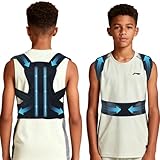

What actually decides a teen posture brace
Most guides lead with straps and padding. That is not the deciding criterion for a teenager. Chest or underbust range is, and the six braces here demonstrate why.
Two of the six publish an adult chest range. The ComfyBrace listing claims a 30 to 43 inch fit, and the Schiara listing claims 30 to 42 inches. That lower bound of 30 inches matters. A younger teen with a slighter chest sits below that range, and a brace that will not cinch closed does not correct anything.
Only the Lexniush explicitly claims four graded sizes, described as fitting underbust measurements from 15 to 50 inches. That is the widest declared fit window in this set and the only one that stretches down to a pre-teen frame.
Weight is the second axis. It runs from 1.41 oz on the Flylin to 0.53 lb on the Lexniush, which is a real difference on a school day. A lighter brace stays wearable through a whole period at a desk. A heavier one comes off after twenty minutes and does nothing for the rest of the afternoon.
- Chest or underbust range first: does the published fit include your teen?
- Weight second: will they leave it on long enough to matter?
- Graded sizes over one-size: growing frames rarely land on a universal design.
How I narrowed the field to six
I worked from the published listings, not from time on the body. The criteria and their weights were set before I opened the data.
- Published fit range. A brace with no size or chest figure gets ranked below one that publishes both. This is the single biggest filter.
- Weight, listed with a unit. A figure in ounces or pounds beats "lightweight". Four of the six list one.
- Whether the listing addresses teenagers directly. Three of the six do: the Lexniush, the Flylin and the RNEMP. The other three are adult braces whose fit range happens to overlap with older teens.
- What the manufacturer actually claims the brace does. Every listing here mentions posture correction, shoulder alignment or hunchback prevention. None claims medical outcomes, and I did not extend any into a medical claim.
Braces cut from consideration in the wider category typically fell on the first criterion. A listing with no published chest or underbust range is not a shortlist candidate for a teenager, whose frame is the whole reason you are shopping in the first place. Of the six that survived, the ComfyBrace and the Lexniush cleared every criterion. The sundpik cleared the criteria on described purpose but publishes only a count, which is why it sits where it does.
1. ComfyBrace Posture Corrector — Best overall
A 4.66 oz upper back brace with the widest published adult chest range in this set, which covers most mid to late teens.
Best for: an older teen with a 30 to 43 inch chest who wants the lightest daily brace Skip it if: your teen has a chest under 30 inches
The ComfyBrace wins on the two figures that matter for a teenager. Weight is 4.66 oz, the second-lightest in this set with a listed weight, and dimensions are 0.39 x 6.3 x 4.72 in, which is a compact footprint under a school shirt. ComfyBrace claims the fit range spans 30 to 43 inches of chest, which is wider than the Schiara's claimed 30 to 42 inches and wider than any other adult listing here that publishes a range. The brand also suggests starting at 5 to 10 minutes a day and building up, which is sensible pacing for a teenager whose upper back muscles need to adapt.
Within this set, this is the one buyers choose most often. Against the Lexniush, the ComfyBrace loses on one point: it is not sized for younger teens. Its 30 inch lower bound assumes a mid-adolescent chest, and there is no smaller size option in the listing.
Pros:
- Lightest weight with a listed figure at 4.66 oz
- Widest claimed adult chest range at 30 to 43 inches
- Compact 0.39 in thickness under clothes
- Manufacturer suggests a 5 to 10 minute ramp
- The one shoppers pick most often in this set
Cons:
- Lower bound of 30 inches excludes younger teens
- The most expensive pick here
- No graded sizing, one design fits the whole range
2. sundpik Posture Corrector — Best upgrade
A low-profile upper back brace whose listing leans on breathable material and versatility rather than published sizing figures.

Best for: a teen who wants a low-profile brace to wear under a uniform shirt Skip it if: you want published size and weight figures before buying
The sundpik is the second-cheapest of the six and the sundpik listing puts breathability and daily wearability front and centre. sundpik says the brace helps open the shoulders and is designed to relieve pain caused by looking down at phones and computers, which is the exact use case for a modern teenager. The brand also describes it as textured enough to wear outside a shirt, though most teens will want it under one.
The trade-off is transparency. The listing publishes a count but no weight, no dimensions and no chest range. For a teen buyer, that is a real gap, because you cannot confirm fit before it arrives. If your teen falls near the middle of the adult range and you are willing to check dimensions on arrival, this is a strong day-to-day pick. If you want to know before you buy, the ComfyBrace and the Schiara give you numbers.
Pros:
- Second-cheapest of the six
- Manufacturer highlights breathable material
- Described as texturally acceptable outside a shirt
- Targeted at phone and computer posture
Cons:
- No published weight or dimensions
- No stated chest or underbust range
- Fewer listing specifications than any other adult pick
3. Lexniush Posture Corrector — Best minimal setup
The only pick in this set with a listing built around children and teenagers, in four graded sizes claimed to fit a 15 to 50 inch underbust.

Best for: younger teens whose parents want a size dedicated to kids and teenagers Skip it if: your teen's underbust falls outside 15 to 50 inches
The Lexniush is the pick when the teen is on the younger or smaller side of adolescence. Lexniush claims four sizes covering underbust measurements from 15 to 50 inches, which is a wider window than any adult listing in this set publishes. The brand also states the brace is designed for children and teenagers explicitly, with two support bars on the back and Velcro strap adjustment. Weight is 0.53 lb, which is the heaviest listed figure here.
That weight is the trade-off. This is not the brace a teenager forgets they are wearing at their desk. It is the brace that fits when the alternatives will not close on a smaller frame. Against the ComfyBrace, the Lexniush loses on weight and cost position, but wins outright on graded sizing. Lexniush suggests the brace can be worn under clothing at school, which matches the practical reality: teens will not wear anything visible.
Pros:
- Only pick with four graded sizes claimed
- Widest published fit range at 15 to 50 in underbust
- Listing explicitly targets kids and teenagers
- Two support bars for structured back contact
- Described as wearable under school clothes
Cons:
- Heaviest listed weight in this set at 0.53 lb
- Slowest seller among picks with a listed weight
- Size guide requires careful measurement before ordering
4. Flylin Posture Corrector — Best for pros
The lightest listed weight in this set at 1.41 oz, on a medium brace aimed directly at kids and teenagers.

Best for: a lean teenager who prefers the lightest brace available Skip it if: you need a size larger than medium
Flylin publishes a listed weight of 1.41 oz, the lowest figure in this set by a wide margin. For a teenager who abandons anything they can feel, that is the specification that matters. The listing says the brace is ergonomically designed to be invisible under clothes, with two aluminium support bars to stabilise the collarbone and upper spine. Flylin recommends 15 to 20 minutes a day to start, then building from there.
The catch is what the size field says: Medium, with no wider range published. That works if your teen sits squarely in the middle of the size band, and does not if they do not. The Flylin is the second-slowest seller of the six, which suggests fit variability is a real consideration here. Against the Lexniush, the Flylin trades graded sizing for a much lighter brace. If your teenager is lean and cooperative, this is the pick they will actually keep on.
Pros:
- Lightest listed weight at 1.41 oz
- Two aluminium support bars named in the listing
- Designed for kids and teenagers per the brand
- Manufacturer suggests a 15 to 20 minute ramp
Cons:
- Only medium is specified, no graded sizes stated
- No published chest or underbust range
- Second-slowest seller of the six
5. RNEMP Teen Boys' Back Brace — Runner-up
A one-size brace framed around homework and screen time for teen boys, with wide padded shoulder straps.

Best for: a teen boy using it during homework and screen time Skip it if: your teen has broader-than-average shoulders and needs graded sizing
RNEMP takes the most specific stance in this set. The listing describes the brace as designed for homework, reading and screen time, with two flexible plastic support strips and wide padded straps meant to spread shoulder contact across a broader area. Dimensions are 1.57 x 8 x 5 in, which is the bulkiest listed profile here. RNEMP also cautions that fit varies by shoulder width and recommends reviewing the size guide, especially for broader shoulders.
That one-size design is the weakness. Against the Lexniush's graded sizing, the RNEMP asks you to trust a single fit for every teen, which is a stretch on shoulders that change year on year. The brand names airflow openings for desk study and describes the brace as washable, which is a practical detail for daily school wear. It is the slowest seller of the six, which reflects the narrower buyer profile more than the design.
Pros:
- Wide padded straps for broader shoulder contact
- Two flexible plastic support strips
- Listing describes airflow openings for desk use
- Framed around homework and screen time
Cons:
- One size only, fit varies by shoulder width
- Bulkiest listed dimensions in this set
- Second-most expensive pick with no listed weight
6. Schiara Posture Corrector — Best budget pick
The cheapest of the six, with a claimed 30 to 42 inch chest range and a listed 4.94 oz weight.
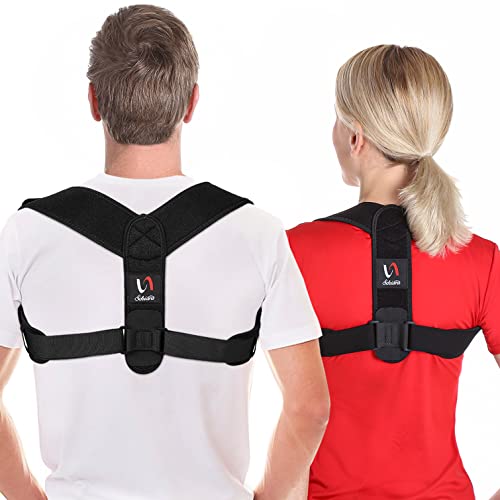
Best for: families trying a first brace without spending on a premium model Skip it if: your teen's chest is above 42 inches
The Schiara is the cheapest pick here and the second-lightest with a listed weight at 4.94 oz. Its dimensions are 0.21 x 9.84 x 2.76 in, which is the thinnest listed profile in this set at 0.21 in thick. Schiara claims a chest range of 30 to 42 inches, one inch narrower at the top than the ComfyBrace but otherwise comparable. The brand describes the brace as invisible under clothes and made of a lightweight, breathable fabric.
For a first purchase, that combination is hard to argue with. A teenager may or may not wear a brace consistently, and paying premium money for a first attempt is a common way to overspend. Against the ComfyBrace, the Schiara gives up one inch of top-end chest range and a fraction of an ounce, and gains a lower entry cost. It is the second-fastest seller of the six, close behind the ComfyBrace.
Pros:
- The cheapest of the six
- Second-lightest listed weight at 4.94 oz
- Thinnest listed profile at 0.21 in
- Claimed 30 to 42 in chest range
- Second-fastest seller of the six
Cons:
- Same 30 inch lower bound excludes younger teens
- Top range one inch below the ComfyBrace
- No graded sizes stated
Adult-sized versus teen-sized: does it matter?
Adult-sized versus teen-sized matters most when the fit range does not overlap. Three of the six braces here list themselves as adult designs: the ComfyBrace, the sundpik and the Schiara. Two describe themselves for kids and teenagers explicitly: the Lexniush and the Flylin. One targets teen boys directly: the RNEMP.
The overlap works when a teen sits inside the adult chest range. The ComfyBrace claims 30 to 43 inches, the Schiara claims 30 to 42 inches, and a mid-teen with a 32 or 34 inch chest fits both cleanly. Below 30 inches of chest, though, an adult brace runs out of adjustment. The straps close, but the back panel sits too wide, and the shoulder pull loses its angle.
That is where the Lexniush earns its section. The brand claims an underbust window from 15 to 50 inches across four sizes, which is the only listing in this set that reaches genuinely small frames. The Flylin is described for kids and teenagers but publishes only a medium size, so it is a teen-labelled brace with adult-scale sizing. If you are shopping for a younger teen, the label is not enough. Check the numbers.
How long should a teen wear one each day?
How long should a teen wear one each day is a question two of the brands in this set answer directly. ComfyBrace suggests starting at 5 to 10 minutes per day and building to an hour or two. Flylin recommends 15 to 20 minutes a day to start. Both are ramp protocols, which is the sensible approach: a posture brace works the upper back muscles, and pushing straight to an hour on day one leaves a teen sore enough that they will not wear it on day two.
- Start short, on the order of 10 to 20 minutes.
- Build gradually across a week or two.
- Wear it during a specific activity, not all day.
- Take it off at the first sign of pinching or numbness.
- Treat it as a training cue, not a permanent support.
None of the listings claim a medical outcome, and neither do I. A brace is a physical reminder to sit straight during homework or screen time. It is not a substitute for a doctor's assessment if a teenager has ongoing back pain.
What the listings do not tell you
Four things the listings gloss over are worth knowing before you buy.
- Sweat management under school clothes. Every listing here mentions breathability. None publishes a fabric composition or a wash cycle rating. Plan on hand-washing.
- How the straps sit under a backpack. A teenager wearing a brace and carrying a backpack has two sets of straps crossing the same shoulders. The RNEMP addresses this with wide padded straps; most of the others do not.
- How obvious it is under a shirt. ComfyBrace, Lexniush, Flylin and Schiara all claim the brace is invisible under clothes. That claim depends on the shirt. A thin fitted t-shirt shows any brace. A regular school shirt hides most.
- What happens if the fit is wrong. None of the listings state a warranty, and none states a return or replacement policy. Measure carefully before ordering, especially for a one-size product like the RNEMP.
The gap that matters most is the second one. A teen wearing a brace to school is also carrying a bag, and that combination is not addressed in most listings.
Head-to-head: ComfyBrace vs Lexniush
The two picks that clear every criterion are the ComfyBrace and the Lexniush, and they suit different teens. The ComfyBrace weighs 4.66 oz, is 0.39 in thick, and claims a 30 to 43 inch chest range. The Lexniush weighs 0.53 lb, offers four sizes and claims a 15 to 50 inch underbust range.
If your teen has a chest of 30 inches or more, the ComfyBrace is the answer. It is lighter, thinner and more likely to stay on through a full afternoon of homework. If your teen has a chest or underbust under 30 inches, the Lexniush is the only pick here whose sizing reaches them. It is heavier and more noticeable, but a brace that fits does something. A brace that does not fit does nothing.
The ComfyBrace is the second-fastest seller in this set. The Lexniush trails, which reflects the smaller pool of buyers shopping specifically for children and teenagers. Neither figure changes the recommendation. Fit does.
The verdict
The best posture corrector for teens is the ComfyBrace Posture Corrector for any teen whose chest measures 30 to 43 inches. It is 4.66 oz, 0.39 in thick, and the manufacturer suggests a 5 to 10 minute ramp that suits a teenager building tolerance. It is the most expensive pick in this set, but it is also the one that combines a published fit range, a listed weight and a compact footprint under clothes.
Two conditions flip the pick. If your teen's chest or underbust is under 30 inches, buy the Lexniush Posture Corrector instead. It is the only brace here with four graded sizes and a claimed 15 to 50 inch underbust range, and no adult brace with a 30 inch lower bound will do the job on a smaller frame.
If cost is the constraint on a first attempt, buy the Schiara Posture Corrector. It is the cheapest of the six, weighs 4.94 oz, and claims a 30 to 42 inch chest range that overlaps most of the ComfyBrace's window. You give up an inch at the top and gain a lower entry cost, which is a fair trade on a product a teenager may or may not stick with.
FAQ
Is a posture corrector worth it for a teenager?
Is a posture corrector worth it depends on how the teen will use it. A brace works as a physical cue during homework, reading and screen time, which is why the RNEMP listing frames it that way. It is not a substitute for exercise or a medical assessment. If a teenager will wear it during specific sedentary activities and take it off otherwise, the payoff is realistic. If they will not put it on at all, no brace helps.
How does the best posture corrector for teens fit a smaller frame?
The best posture corrector for teens fits a smaller frame only when the sizing reaches down to one. In this set, the Lexniush is the only brace whose listing claims four graded sizes covering a 15 to 50 inch underbust. The adult picks like the ComfyBrace and Schiara start at a 30 inch chest, which excludes younger or slighter teens. Always measure before ordering.
ComfyBrace or Lexniush for a 13-year-old?
ComfyBrace or Lexniush for a 13-year-old depends on chest size. If your 13-year-old measures 30 inches or more around the chest, the ComfyBrace fits, weighs 4.66 oz and is thinner under clothes at 0.39 in. If they measure below 30 inches, the Lexniush is the pick, because its four sizes claim a 15 to 50 inch underbust range and reach smaller frames the adult braces do not.
How long each day should a teenager wear one?
How long each day should follow the brand's ramp guidance and the teen's tolerance. ComfyBrace suggests 5 to 10 minutes a day to start, building toward an hour or two. Flylin suggests 15 to 20 minutes a day at first. Start short, add time gradually, and stop at the first sign of pinching. Treat the brace as a training cue during specific activities, not a permanent support to wear all day.
What is the lightest brace in this set?
What is the lightest brace here is the Flylin Posture Corrector at 1.41 oz, according to the listed weight. The ComfyBrace follows at 4.66 oz and the Schiara at 4.94 oz. The Lexniush is the heaviest with a listed weight at 0.53 lb. The sundpik and RNEMP do not publish a weight. For a teen who abandons anything they can feel, weight is the specification worth checking first.
If you are shopping today, start with the ComfyBrace Posture Corrector unless your teen's chest measures below 30 inches, in which case start with the Lexniush. Measure the chest and underbust before you order, because the fit range is what actually decides whether a brace does its job or sits in a drawer. Pair the brace with a specific daily activity, whether that is homework, reading or screen time, and use the manufacturer's ramp guidance rather than pushing for long sessions on day one. A posture corrector for teens is a training tool. The best one is the one your teenager will actually keep on their shoulders long enough to feel a difference.